
Wildflower Moon walk
A summer wild edged wander through a very sacred wildflower meadow and combe

Hello deer ones.
Blessed Full Wildflower Moon to you.
After an intense heat wave, there is a little reprieve now with cloudy skies and cooling sighs. I took a wild pilgrimage to some of the most ancient and tucked away meadows in Dorset yesterday and felt guided to share some of the sacred connections I had with you in this weekend’s post. It was more than just a walk you see and there were a lot of ‘moments’, (you know the type I am sure!). The ‘almost’ full moon energy was very potent in so many ways as I explored. I feel the journey I took whilst there would not have been so immersive had the moon been waning.
I feel a close affinity to the Otherworld when I am in a wide open early Summer wildflower meadow. There is something about so many species of flower and plant close together that heightens senses and attracts spirits. The meadow is in it’s waxing phase up until mid July and this matched the lunar energy well yesterday for me. Summer seems to bring the Fae and in particular mischievous spirits closer to our world, I feel many of these are more tangibly present amid the lush, green undergrowth and through the heady, lighter evenings.
In this gentle, summer breeze of a post I take you for an early morning wander in a very liminal and lush Kingcombe Nature Reserve sanctuary.
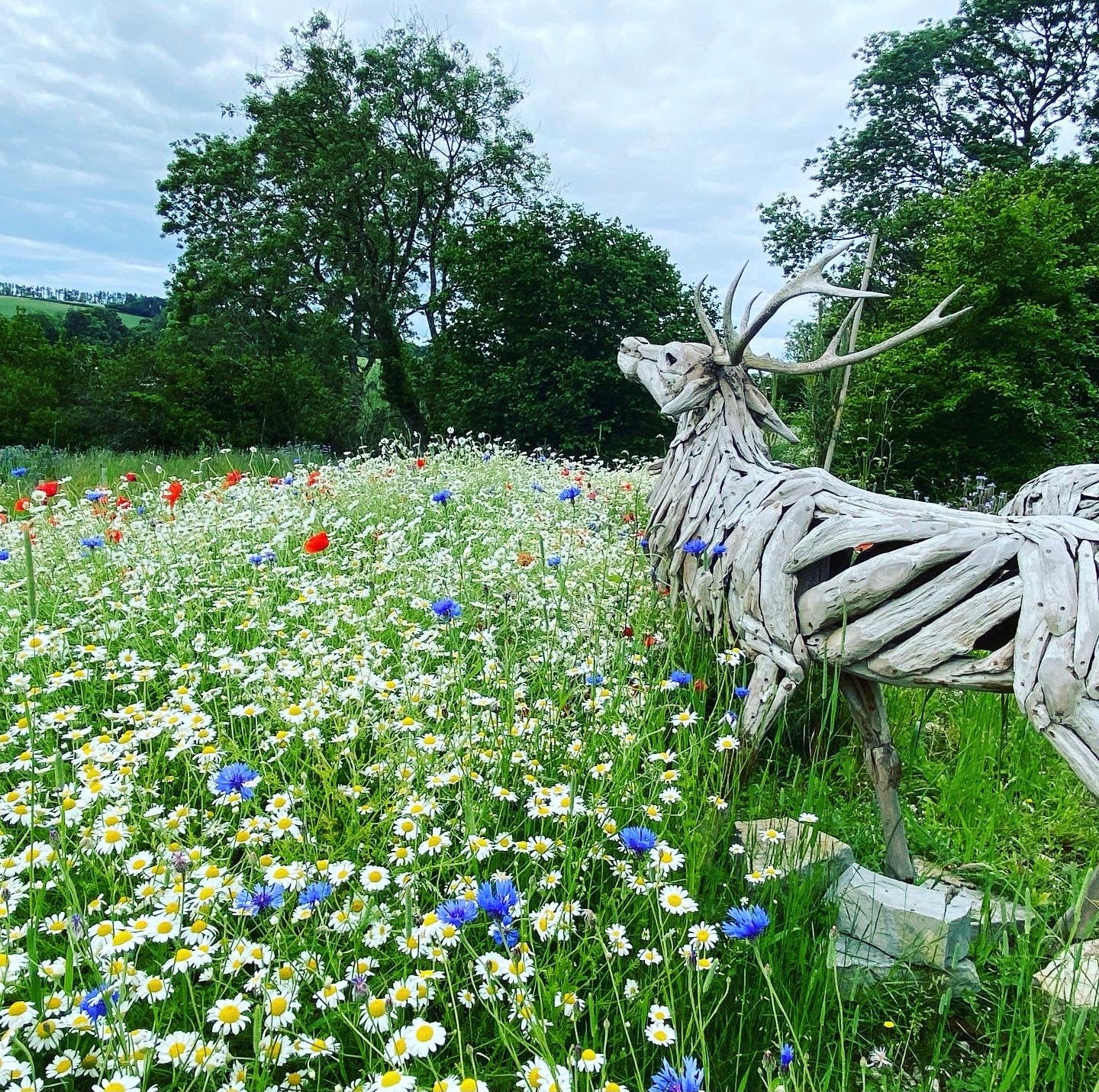
Kingcombe - valley of Oaks, wild meadows and hollow ways
A combe (also spelled coombe) is the name for a steep, narrow valley or a hollow on the side of a hill. Combes are very frequently densely wooded too. Kingcombe used to be part of a Royal Forest claimed by King John in the early 13th century, (shortly before the signing of the Magna Carta).
Combe is a term linked to the SW of England, particularly Dorset and Somerset. We are surrounded by combes in this part of West Dorset!
Kingcombe Farm sits in a landscape defined by ancient, species-rich hedgerows, some of which date as far back as 1050 to 1200. There are sunken green lanes (hollow ways) which hold the echoes of centuries-old horse and cart tracks. Now they are footpaths and safe havens for deer and other wildlife. I walked up one of these eerie and liminal wooded hollows, known as Mount Pleasant lane on my walk - more on this further on.
Dorset Wildlife Trust became the owners of most of the land at Kingcombe (around 600 acres), when it was sold in the late 1980s. The previous owner had managed the hay meadows in a sensitive way for many years. Currently it is farmed both regeneratively and organically, which this allows for the meadows and wildlife to thrive so well.
Wild flower meadows have long been an inspiration for people - providing nectar rich metaphors around the beauty of diversity and creative co-existence and wild or uncultivated personal growth.
Unlike manicured formal gardens that require intensive and often rigid conformity, a wildflower meadow honours biodiversity. Natural ecosystems invite wild diversity and resilience and co-creativity to flourish, but in the human systems this can be seriously suppressed and restricted.
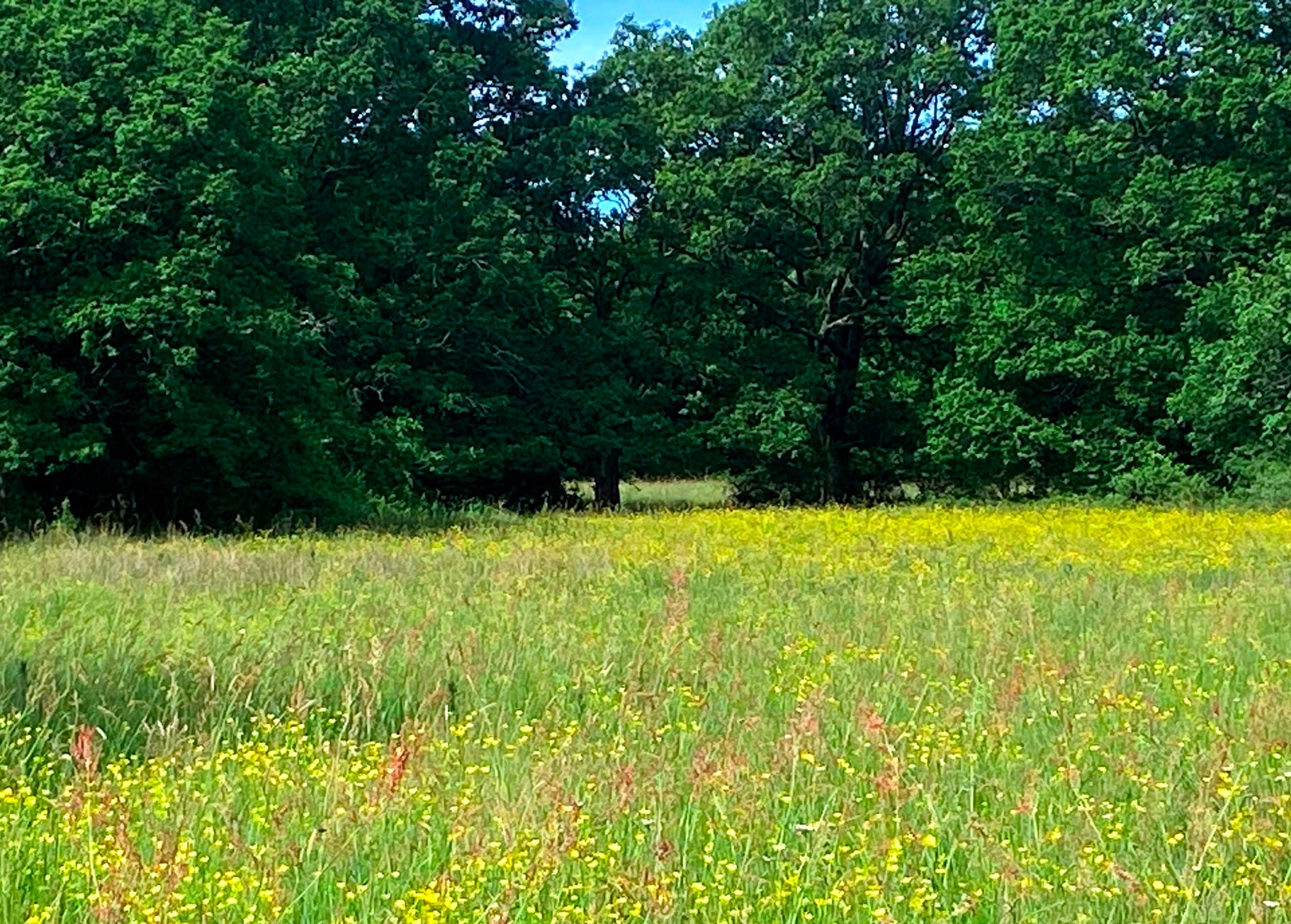
The walking journey…
As wild pilgrims we will cast our eyes around ancient Oaks, abundant wild flowers, insects and busy birds. We drift and dream a little as the pollen and enchanting hum of many bees carry us along.
